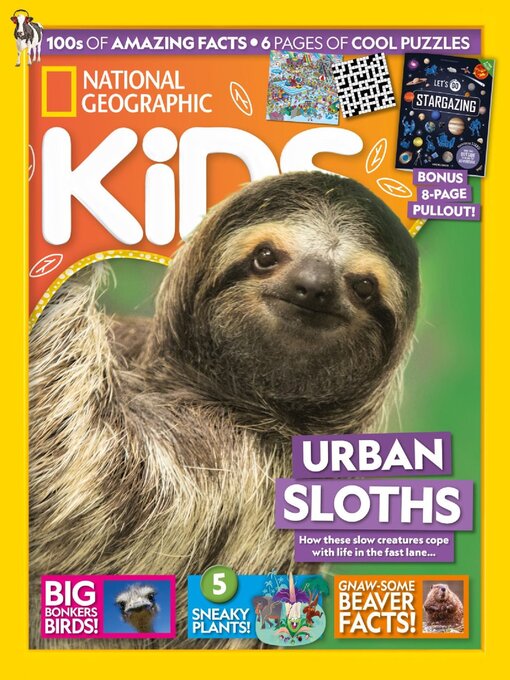
 Issue 135
 Issue 134
 Issue 133
 Issue 132
 Issue 131
 Issue 130
 Issue 129
 Issue 128
 Issue 127
 Issue 126
 Issue 125
 Issue 124
 Issue 123
 Issue 122
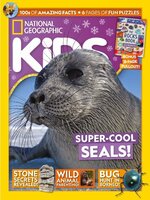 Issue 121
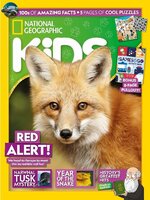 Issue 120
 Issue 119
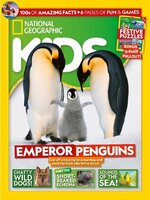 Issue 118
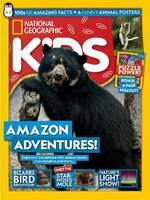 Issue 117
 Issue 116
 Issue 115
 Issue 114
 Issue 113
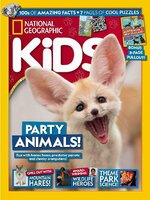 Issue 112
Perfect for nature-loving 7-12 year olds, each issue of Nat Geo Kids is carefully curated to ignite curiosity and spark conversations about science and nature, empowering children to love and care for our beautiful planet.
NATIONAL GEOGRAPHIC KiDS
WHAT’S NEW? • Terrific books, cool movies and a wild TV show…
COOL NEWS • Inspiring stories from around the globe…
THE BIG PICTURE • NAT GEO KIDS’ image of the month
URBAN SLOTHS • How conservationists are helping these slow-moving animals survive alongside humans…
Fooled Ya! • Five ways ostriches aren’t your average bird
Grounded! • Like ostriches, these birds are flightless, too. But they use their wings in surprising ways…
SNEAKY PLANTS • You might be shocked by these surprising species, which eat bugs, send secret messages and more…
Weird but true! • Check out these outrageous facts…
NATIONAL GEOGRAPHIC KiDS
WACKY WORLD! • The planet’s strangest pictures…
8 AWESOME FACTS ABOUT BEAVERS
7 uplifting facts about flight
SCIENCE SLIP-UPS • Four Nat Geo Explorers reveal their silliest mishaps!
JUNIOR EXPLORERS’ CLUB
FUN STUFF • GAMES, LAUGHS AND LOTS TO DO!
BOOST YOUR BRAIN • Give your brain a workout with these tricky puzzles!
SPOT THE DIFFERENCE • Can you find the 20 differences between these two rainforest scenes?
CROSSWORD
ANIMAL BLOOPERS • Animals make mistakes, too!
BISCUIT CAKE • This Italian treat is also known as ‘salame di cioccolato’ or chocolate salami! Made of melted chocolate and biscuits, it’s a brilliant birthday or Easter cake - and super easy to make.
FUN STUFF ANSWERS
THE LAST LAUGH
National Geographic Kids (AU/NZ)
STORIES IN THE STARS • For thousands of years, humans have tracked patterns in the night sky. Very early stargazers didn’t have the instruments to explore or understand the science of space and would often look at the skies through a mystical eye.
TRAVEL BY THE STARS • When humans began to see repeating patterns in the sky over months and years, they started to use the night sky for more than just stories. They discovered that they could find their way by the stars and tell the time of year, too.
TELESCOPES THROUGH THE YEARS • Since ancient times, people have been striving to get a closer look at the stars. In the early 1600s, an invention came along that finally allowed them to do so: the telescope!
USING STAR MAPS • Because our planet is always moving, what you see in the night sky is constantly changing. A single map cannot cover it! Star maps show the portion of the night sky that you can see from a specific location, at a certain time.
CRUX • Crux is the smallest of all 88 constellations in the sky. Made up of only four stars, it is also called the Southern Cross.
ACTIVITY: STAR HOP! • A wonderful way to get started on your stargazing experience is to star hop: finding the most recognisable patterns in the sky and using them to ‘hop’ to other sights. Try these star-hopper challenges to locate some of the brightest stars in the sky.